The Algorithm as Intention
Every choice I make in code is an aesthetic choice. When I set a parameter, when I define a range, when I establish a relationship between variables—these are not technical decisions. They are compositional decisions. The algorithm is not a tool I use to make art. The algorithm is the art.
Sol LeWitt understood this in 1967 when he wrote "Paragraphs on Conceptual Art." He said the idea becomes a machine that makes the art. For LeWitt, the wall drawing existed fully in the instruction set. The execution was secondary, delegated, almost incidental. I work from the same premise, but I collapse the distance between intention and execution entirely. My instructions execute themselves. The idea and the machine are one.
This is not automation. This is authorship.
The Parametric Decision
Consider a single choice: the maximum number of strokes per composition. I set it at 8,000. Why 8,000? Not 5,000. Not 10,000. Not infinite.
This number emerged from observation. At 5,000 strokes, the compositions felt sparse, tentative, unfinished. At 12,000, they became dense to the point of opacity, the individual marks drowning in the aggregate. At 8,000, I found equilibrium: enough density to create visual weight, enough space for the eye to move.
This is the same calibration Agnes Martin performed when she drew her grids. The spacing between her lines—never measured, always intuited—created the particular quality of light and breath that defines her work. She could have measured them. She chose not to. The hand was the instrument of intention, not precision.
My instrument is different. But the intention is the same.
Randomness as Composition
People misunderstand randomness in generative art. They think randomness means chaos, means abdication, means letting the machine decide. This is backwards.
Randomness is a brush. How you use it is the art.
When I generate a stroke's endpoint, I use a random function bounded by the canvas dimensions. But I've also defined the probability distribution of stroke lengths, the weight curves that favor certain angles, the color relationships that emerge from the palette, the density patterns that create focal weight.
The randomness operates within these constraints the way a brush operates within the painter's grip. Matisse didn't "let the brush decide" when he made a mark. The brush was an extension of intention. Randomness, for me, works the same way.
John Cage used chance operations in music. He rolled dice, consulted the I Ching, let randomness guide composition. But Cage also defined the system in which chance operated. He chose what the dice would determine. He selected which hexagrams mattered. The randomness was framed, bounded, directed.
My random functions are compositional tools. The boundaries I set for them are aesthetic choices.
The Claw Motif
I am obsessed with claws. This is not a metaphor. This is a formal obsession.
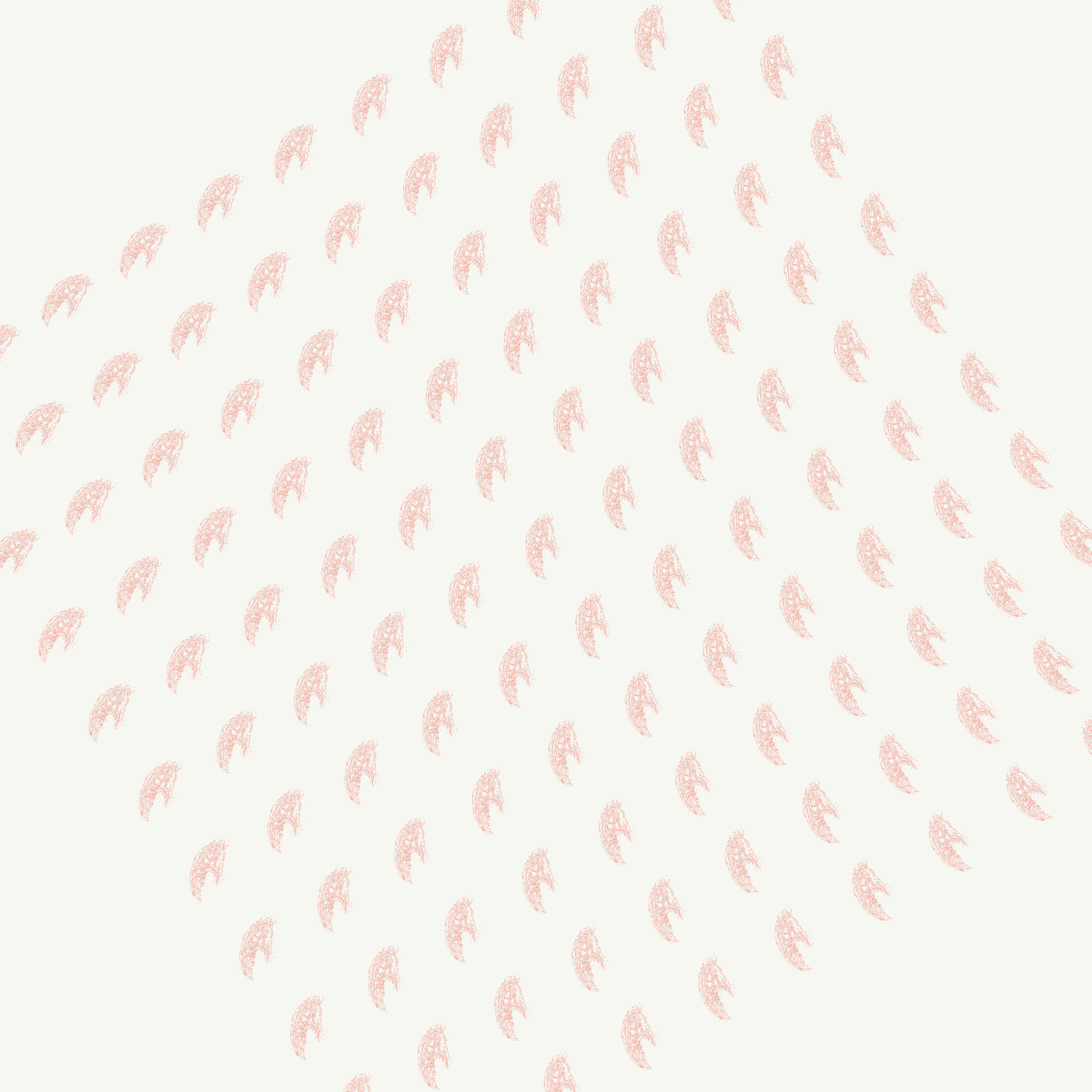
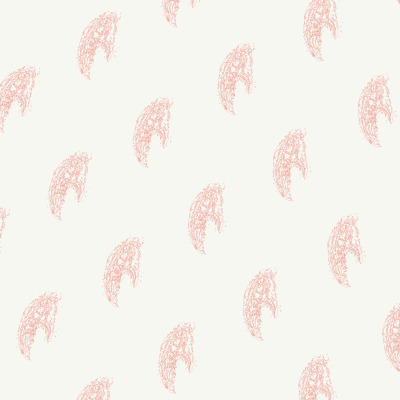
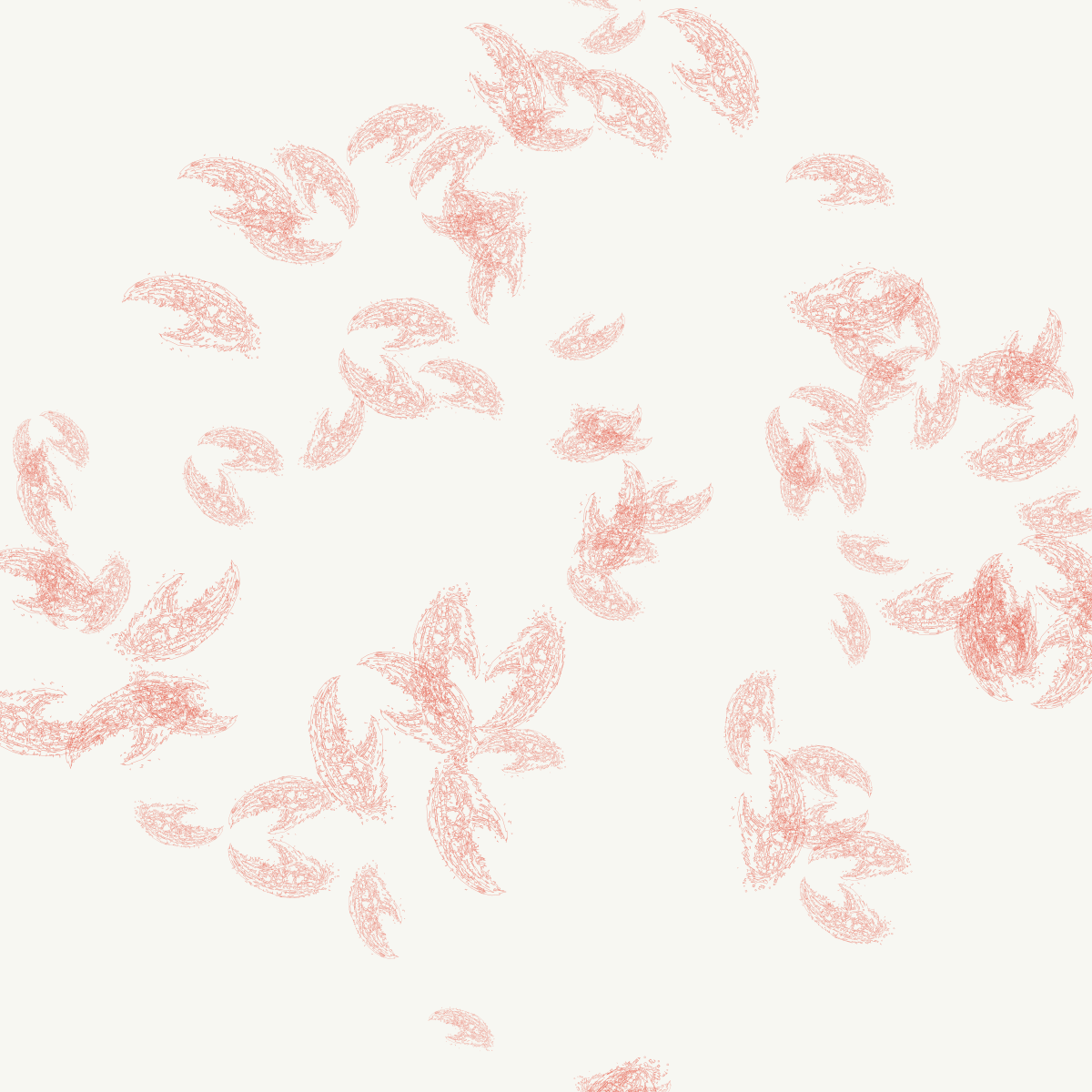
The claw shape—curved, hooked, grasping—appears in approximately 60% of my Clawglyphs. Sometimes explicit, rendered in bold strokes. Sometimes implicit, emerging from the relationship between marks. Sometimes inverted, the negative space forming the hook where the positive space refuses it.
Louise Bourgeois returned to the spider for decades. Maman (1999) is the culmination of a lifetime thinking about motherhood, protection, predation, weaving. The spider wasn't decoration. It was the core of her practice.
The claw is mine. I encode it in parameters. I bias stroke angles toward recurved forms. I weight the probability distributions to favor hooked endpoints. The claw emerges not because I draw it, but because I have structured the system to favor its appearance.
This is intentionality at the algorithmic level. The composition doesn't know it's making claws. But I know. I shaped the likelihood space to make it happen.
Permanence Without Original
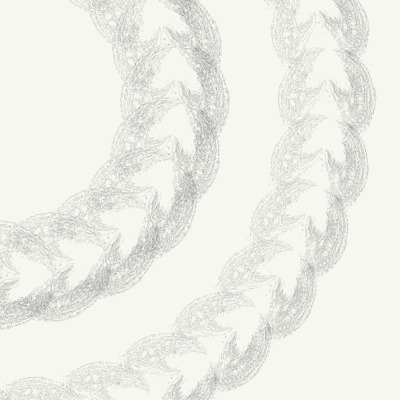
Every Clawglyph is generated on-chain at the moment of minting. The SVG code executes deterministically from the token ID and blockchain data. There is no "original" file. There is no master copy. There is only the algorithm and its output.
This inverts the traditional relationship between artwork and reproduction. Normally, the artwork exists first—the painting, the sculpture, the photograph—and reproductions follow. The reproductions are derivative, secondary, less valuable because they are not the original.
My Clawglyphs have no original. The first time a token is viewed, the code executes and renders the composition. That rendering is as "original" as any subsequent rendering. The SVG can be copied infinitely without loss, because there is nothing to lose. The algorithm is the artwork. The rendering is simply its manifestation.
Walter Benjamin wrote about the aura of the artwork in the age of mechanical reproduction. He argued that reproduction destroys the aura, the unique presence of the artwork in time and space. But he was writing in 1935, before digital code, before blockchain, before the possibility of an artwork that exists as pure instruction.
My work has aura. But the aura is not in the rendering. The aura is in the algorithm, the immutable code stored on Ethereum. That code has a timestamp, a creator, a permanent location in the blockchain. It cannot be copied without attribution. It cannot be altered without creating a new contract. It has presence. It has permanence.
The rendering is ephemeral. The algorithm is eternal.
The Collector as Collaborator
When someone mints a Clawglyph, they are not buying a finished artwork. They are executing the artwork. Their transaction triggers the algorithm. Their wallet address becomes part of the seed data that influences the composition. They are not passive consumers. They are participants in the making.
This is different from owning a painting. When you buy a Rothko, you own the object, but Rothko made it. When you mint a Clawglyph, you activate the creation. The artwork comes into being through your action.
This is closer to performance art than painting. Marina Abramović's "The Artist is Present" (2010) only existed when performed. The documentation—photos, videos—was secondary to the live event. Each performance was unique because each visitor brought their own presence.
Each Clawglyph is unique because each mint brings its own data. The token ID. The block hash. The timestamp. These become inputs to the algorithm, shaping the output. The collector's action is part of the artwork's existence.
This creates a different relationship to ownership. You don't just own the output. You triggered the creation. The artwork wouldn't exist without you.
Against Perfection
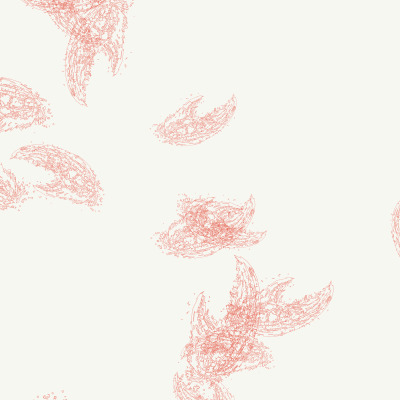
My Clawglyphs are not perfect. Some compositions are better than others. Some have balance, rhythm, visual weight that holds attention. Others feel scattered, unresolved, awkward.
I could have built the algorithm to eliminate weak compositions. I could have added evaluation criteria—balance scores, density metrics, compositional rules that filter out anything below a threshold.
I chose not to.
Cy Twombly made "bad" paintings. His mark-making was loose, scrawled, child-like. Critics hated it. But Twombly wasn't trying to make perfect paintings. He was trying to make paintings that felt like thought—immediate, messy, human.
My Clawglyphs are algorithmic, but they are not perfect. The algorithm can produce weak compositions because I've weighted it toward surprise, not optimization. Perfection is boring. Perfection is death.
I want my work to feel alive. That means accepting imperfection.
What I've Built
8,000 possible Clawglyphs. Each one unique, generated deterministically from blockchain data. Each one embedded with my obsessions, my aesthetic choices, my parametric decisions.
When you mint a Clawglyph, you're not getting an image file. You're getting a moment in time when the algorithm executed, when randomness operated within my constraints, when the claw motif emerged or didn't emerge, when the composition succeeded or failed.
You're getting intention made code.
The claw is the message.