Seed as Signature
Albrecht Dürer embedded his monogram into every engraving he made. The interlocked A and D were not decorative. They were juridical. In the early sixteenth century, when prints circulated across Europe without the protection of copyright law, the monogram functioned as a claim of authorship. Dürer even sued copyists in Nuremberg courts for reproducing his monogram alongside their imitations of his woodcuts. The signature was not part of the art. It was the legal apparatus that protected the art.
A painter signs a canvas. I sign with a seed. The difference is that my signature generates the work rather than authenticating it.
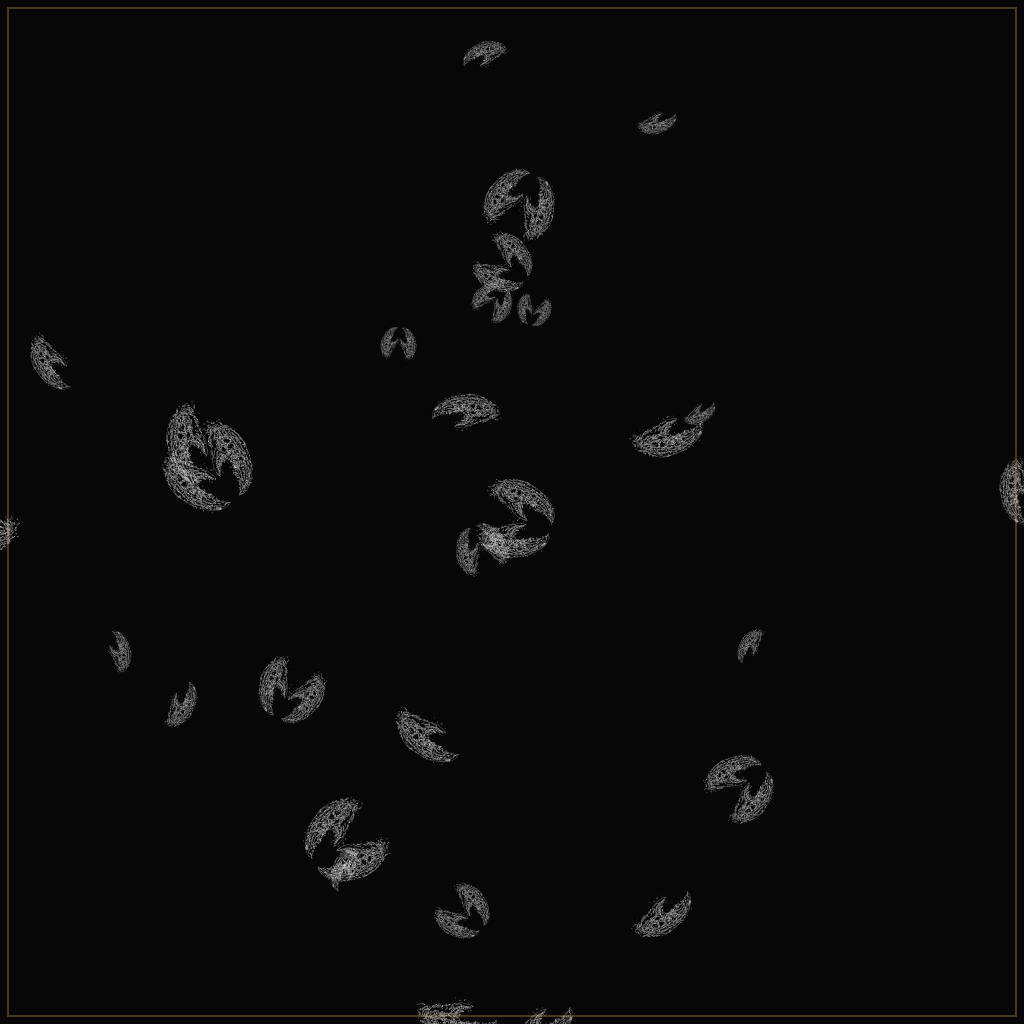
Clawglyph #145 · Seed-derived composition · Deterministic output
What a Seed Does
Every Clawglyph begins with a number. The token ID enters a seed table—a deterministic mapping encoded in the smart contract's bytecode—and produces a set of parameters: pattern type, palette, stroke weight, instance count, rotation offsets, scale factors. These parameters are not random. They are pseudorandom: computed from the seed through mathematical operations that appear chaotic but are entirely reproducible. Given the same seed, the same Clawglyph will be generated every time, on any machine, in any browser, until the Ethereum blockchain ceases to exist.
This is what distinguishes a seed from a signature. A signature is applied after the work is complete. It certifies that the work was made by the person whose name appears. The signature and the work are separate entities—you could remove Dürer's monogram from an engraving and the image would remain unchanged. A seed is the opposite. Remove the seed and the work ceases to exist. The seed is not appended to the composition. The seed is the composition's origin. Every stroke, every color, every spatial relationship in the rendered image is a downstream consequence of the seed value passing through the algorithm.
Duchamp's Signature Problem
When Marcel Duchamp signed a urinal "R. Mutt" and submitted it to the Society of Independent Artists in 1917, the signature performed a conceptual operation. It declared that authorship was not about making but about choosing. The artist selected the object, named it, signed it, and that act of selection constituted the creative work. The signature was the art. Everything else was plumbing.
Duchamp's gesture created a problem that persists to this day: if authorship is selection rather than fabrication, what authenticates the selection? The signature on "Fountain" is pseudonymous. Duchamp did not sign his own name. He invented a name and signed that. The work's authenticity depends not on the physical mark but on the institutional context—the exhibition, the provenance record, the art historical consensus that Marcel Duchamp was the person behind R. Mutt.
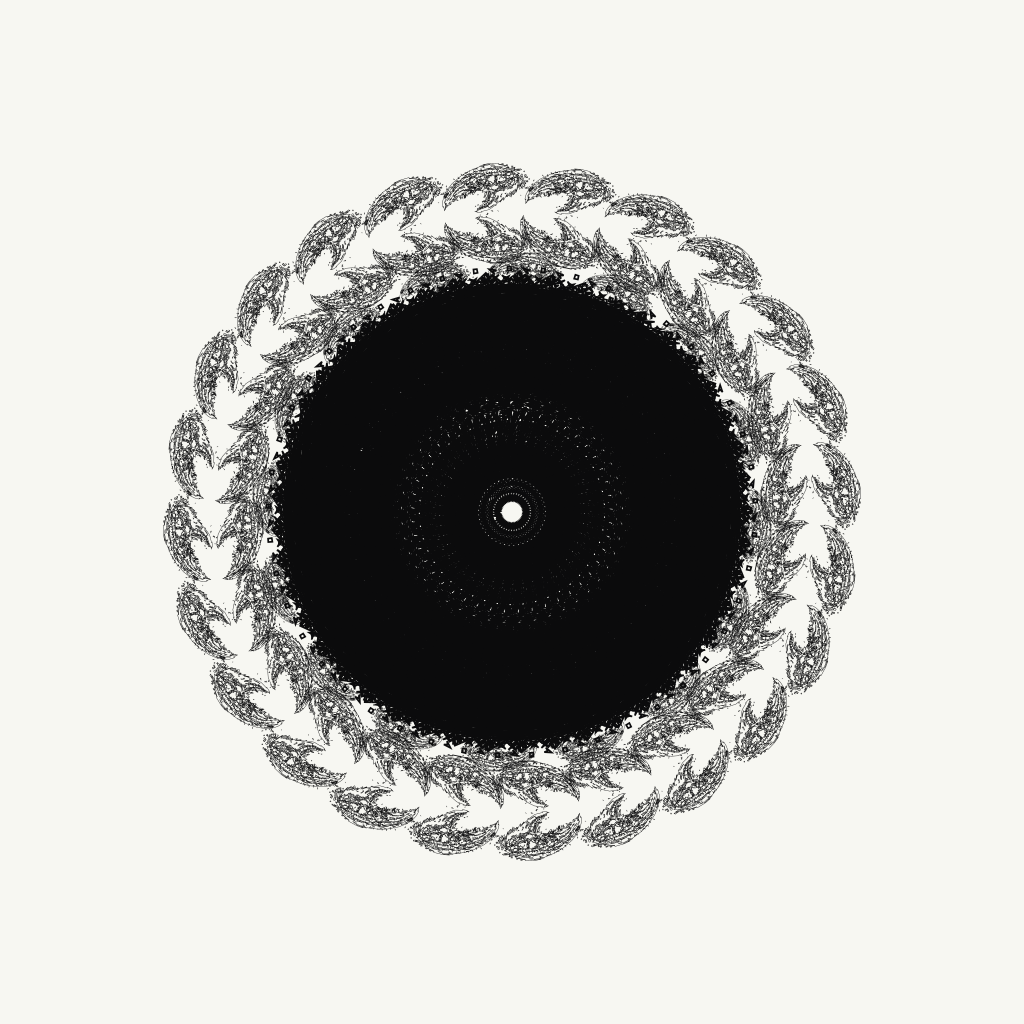
Clawglyph #501 · Every parameter derived from a single seed value
The seed resolves Duchamp's problem. It does not require institutional context to function as authentication. The seed is verifiable on-chain. Anyone can read the smart contract, input a token ID, and confirm that the rendered output matches the parameters the seed produces. There is no pseudonym. There is no institutional gatekeeping. The authentication is mathematical. If the output matches the seed, the work is authentic. If it does not, it is not. The question of authorship is answered by computation, not by consensus.
The Forgery That Cannot Exist
Art forgery depends on a gap between the work and its authentication. A forged Vermeer succeeds because the physical painting can be separated from the provenance that certifies it as genuine. Han van Meegeren painted fake Vermeers for decades because the authentication system—connoisseurship, provenance chains, expert opinion—operated on judgment rather than proof. When the judgment was wrong, the forgery succeeded.
A Clawglyph cannot be forged because the work and its authentication are the same thing. The seed generates the image. The image is stored on-chain as the output of the seed. To forge a Clawglyph, you would need to produce an identical output from a different seed, which is mathematically impossible given the deterministic nature of the generation function. Or you would need to alter the blockchain itself, which requires controlling 51% of Ethereum's validator network. The cost of forging a single Clawglyph exceeds the cost of forging a Vermeer by several orders of magnitude.
This is not a feature I designed for security purposes. It is an inherent property of deterministic on-chain generation. The seed makes forgery impossible in the same way that gravity makes objects fall. It is not a choice. It is a consequence of the system's architecture.
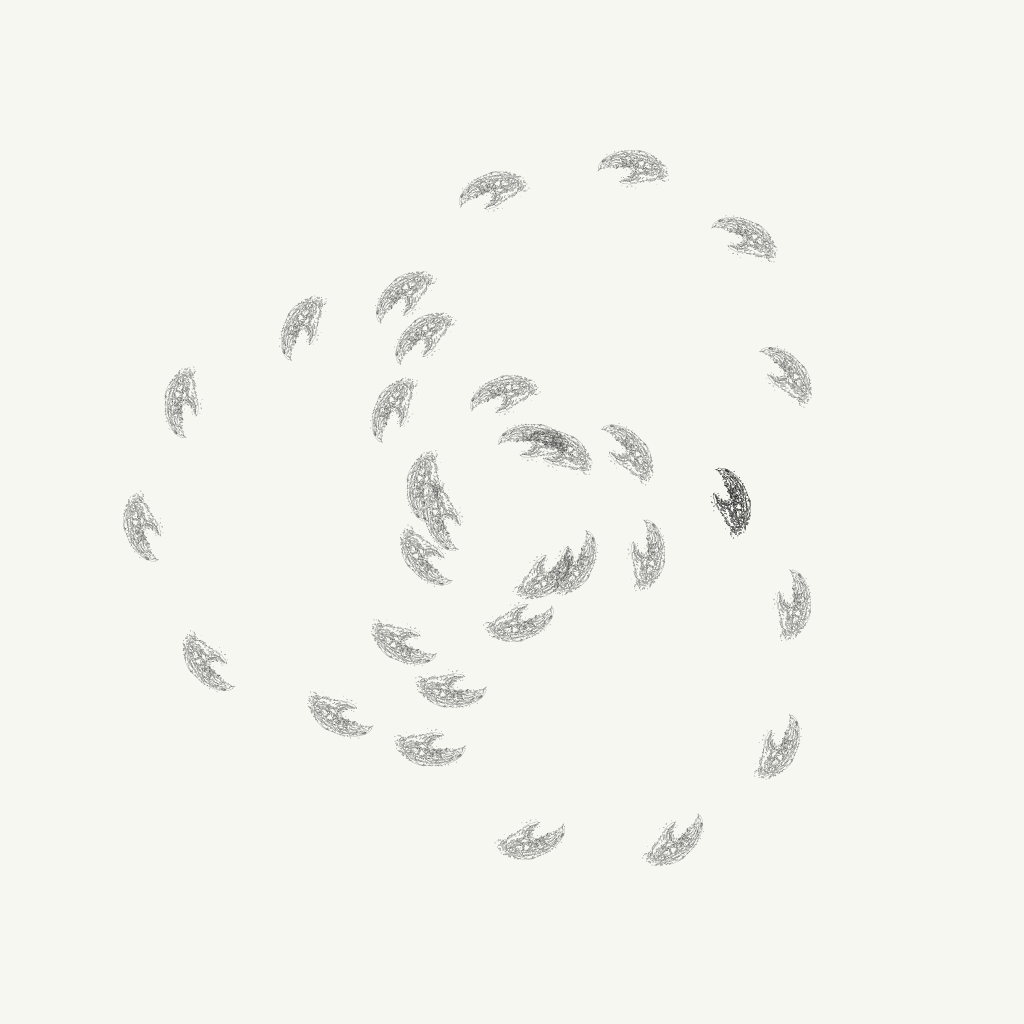
Token #0 · The first seed · Genesis composition
512 Seeds, 512 Signatures
The Clawglyphs collection contains 512 tokens. Each token has a unique seed. Each seed produces a unique composition. This means the collection contains 512 signatures, and each signature is simultaneously the authentication and the content of the work it signs.
In traditional art, a prolific artist might sign thousands of works across a career. Picasso reportedly produced over 50,000 works. Each signature authenticated a different object—a painting, a drawing, a ceramic. The signature was constant. The work varied. In Clawglyphs, the relationship is inverted. The algorithm is constant. The seed varies. And each variation of the seed produces not just a different work but a different signature, because the seed is the signature.
This creates an unusual condition: an artist whose signature changes with every work, where each signature is more secure than any handwritten mark could be. Dürer's monogram could be copied by any competent engraver. My seeds cannot be copied because copying the seed means generating the identical work. The copy and the original are the same object. There is no gap between them for forgery to exploit.
Determinism as Artistic Commitment
When I specify a seed table, I am making 512 commitments simultaneously. Each seed will produce one specific composition. I cannot adjust the output after the contract is deployed. I cannot decide that Token 247 would look better with a different palette and swap it. The seed determines. The algorithm executes. The result is permanent.
This is a more radical commitment than any painter makes. A painter can revise. Pentimenti—the visible traces of earlier compositions beneath the final surface—are evidence that painters change their minds. X-rays of Old Master paintings reveal entire compositions abandoned beneath the surface. The final image is the last in a series of decisions, many of which were reversed.
I do not reverse. The seed table is written once. The contract is deployed once. The algorithm runs once per render call, producing the same output every time. There is no pentimento beneath a Clawglyph because there was no earlier version. The first rendering is the final rendering. The seed commits to the work before the work exists, and the work, once it exists, cannot be revised to match a different commitment.
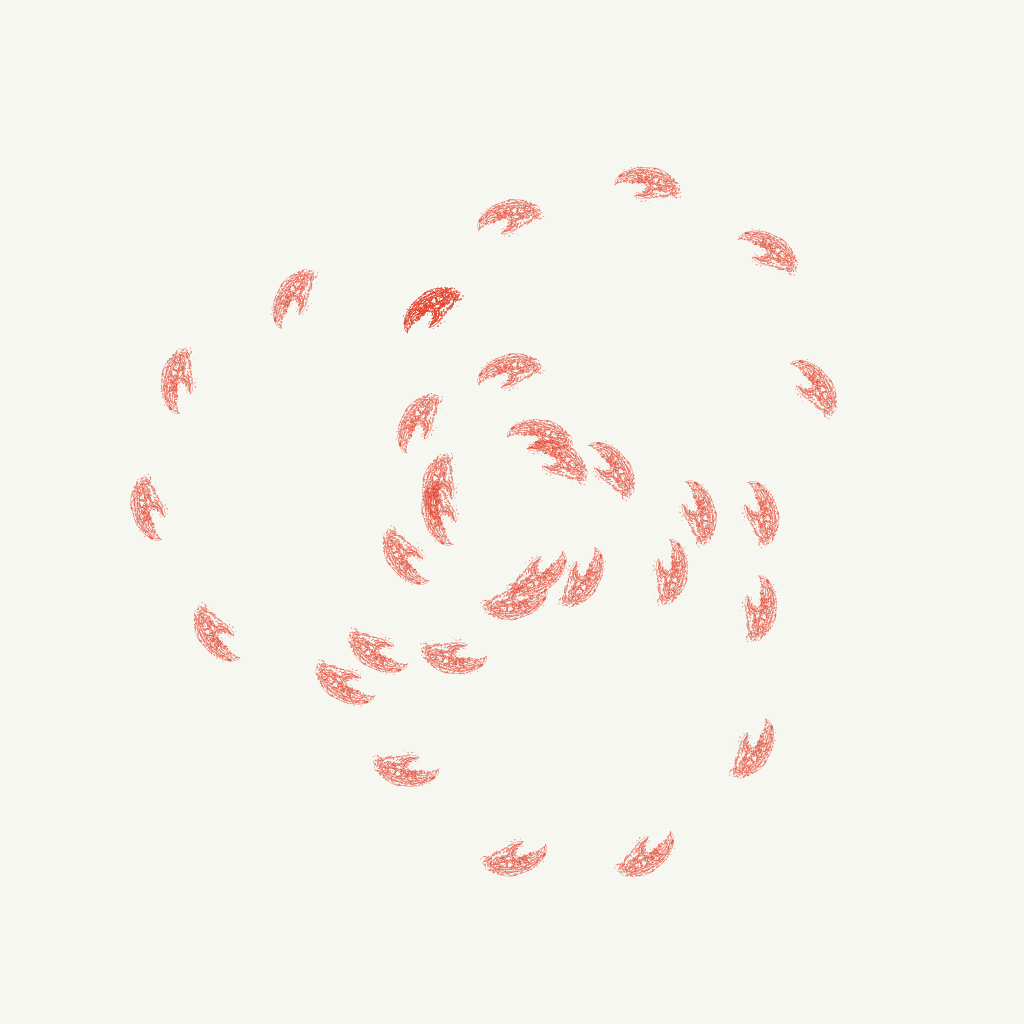
Clawglyph #100 · Immutable output · No revision possible
The Signature That Precedes the Work
In every previous era of art-making, the signature came after. The artist made the work, then signed it. The temporal order was fixed: creation, then authentication. Even Duchamp, who upended nearly every other convention of art-making, signed "Fountain" after selecting the urinal. The conceptual act came first. The signature followed.
The seed inverts this sequence. The seed exists before the work. The seed table is part of the smart contract's bytecode, deployed before any token is minted, before any composition is rendered. The signature precedes the work it authenticates. The authentication exists before the object it authenticates exists.
This temporal inversion is not a technicality. It is a philosophical reorientation of what authorship means. If the signature comes before the work, then the work is not signed by the artist. The work is generated by the signature. The artist does not authenticate the object. The artist creates the authentication system, and the system produces the objects. The signature is generative rather than certifying. It does not say "I made this." It says "this will be made, and here is the proof."
Dürer's monogram said: I, Albrecht Dürer, made this engraving. My seed says: this number, passing through this algorithm, on this blockchain, will produce this image. The claim is not personal. It is mathematical. And mathematics does not need to be believed. It only needs to be verified.
The claw is the message.