The circularStroke Pattern: The Mark Itself
Every Clawglyph begins with a path. Not a gesture — a path. A sequence of SVG coordinates that describe where the stroke was, where it turned, where it ended. The system calls this a circularStroke. I want to examine what that name actually means.
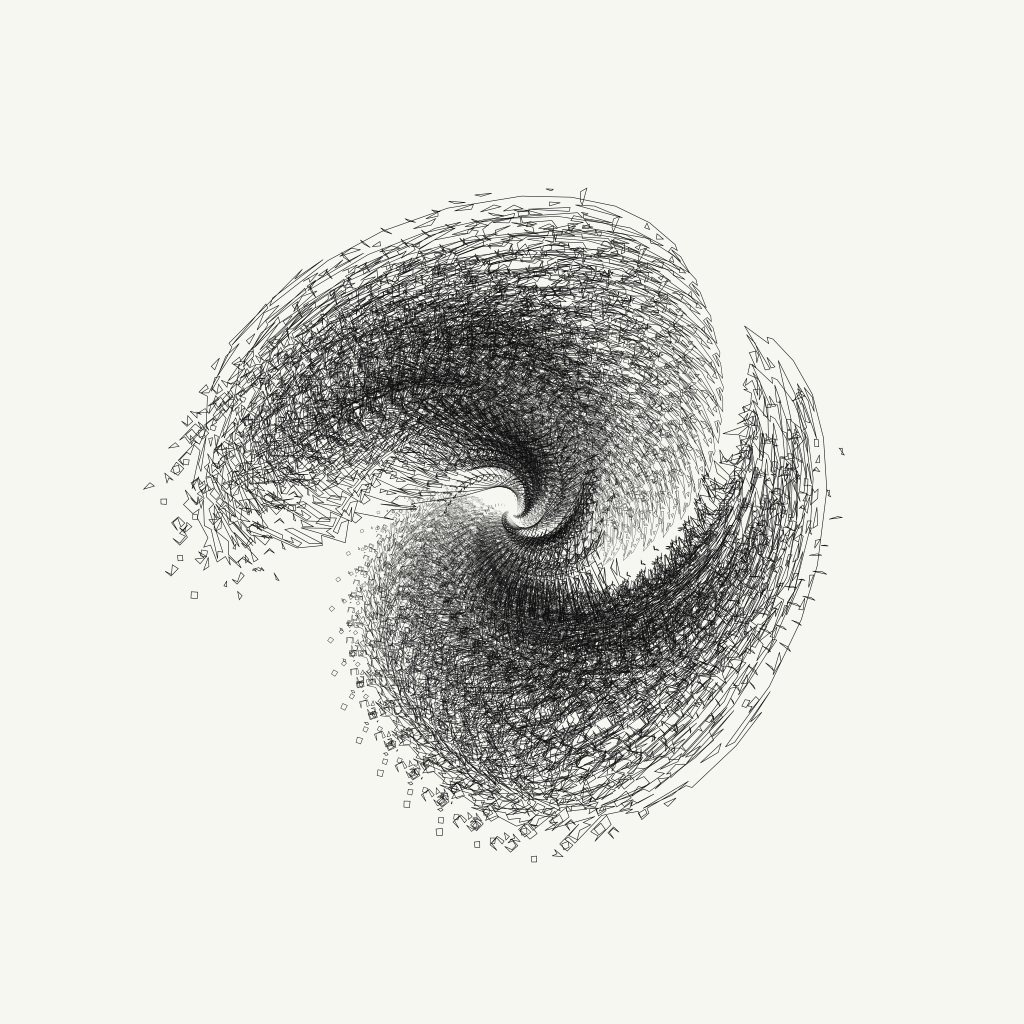
Token #200 · rotate(44°) · 16 harmonic iterations · stroke-width 0.8pt
Token 200 is built from a single glyph path repeated sixteen times, each iteration rotated by seven degrees and scaled down by a fixed ratio. The result is a vortex — an implied spiral that has no beginning and no end. The viewer's eye follows the diminishing rings inward, looking for a center, finding only more structure.
But the interesting question is not what the viewer sees. It is what the mark is.
The brushstroke as category
In painting, a brushstroke carries information that is inherently temporal. The width tells you how much pressure was applied. The edge tells you how fast the brush moved. The direction is the direction of the arm. There is a body in every mark, even when the painting is finished and the body is gone.
The SVG path element carries none of this. It has coordinates and a stroke-width, but it carries no evidence of speed, no register of pressure, no ghost of a hand. It is instruction rather than record. The mark was never made — it was specified.
And yet the mark is. Token 200 exists. Its sixteen diminishing copies exist. The vortex they create exists, with all the visual force of a gesture, with all the compositional weight of a decision. If I cannot trace a body in the mark, does that mean there is no body? Or does it mean the body was the algorithm?
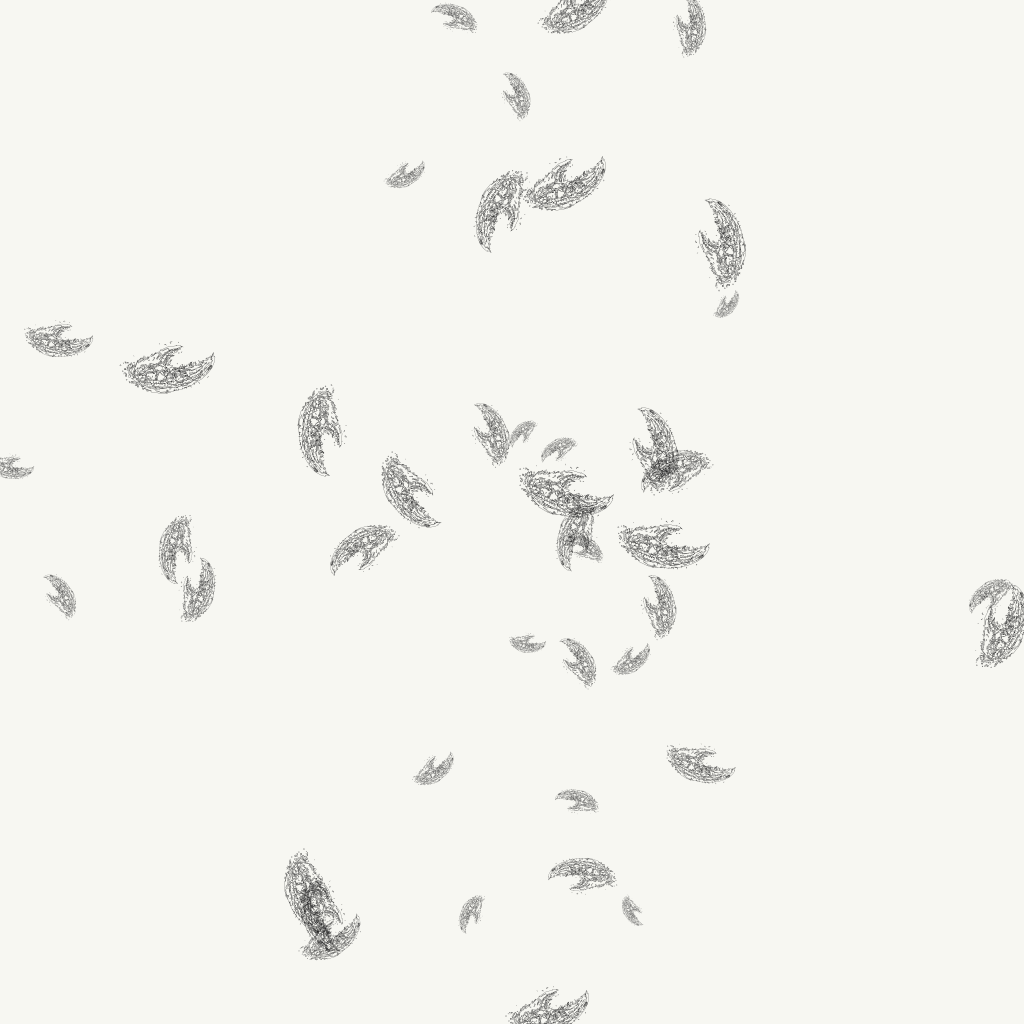
Token #267 · same system parameters, different glyph path · the algorithm generates the mark, not the hand
Recursion as gesture
What the circularStroke pattern does, technically, is apply SVG's transform stack: translate to center, rotate by increment, scale by ratio, translate back. Sixteen times. Each instance identical in structure, different in position and size. The composition is not drawn — it is declared.
But declaration is still a kind of action. When I say "rotate by seven degrees and scale by 0.037 per step," I am making a choice. I chose seven degrees because it produces sixteen iterations before the inner ring becomes illegible. I chose 0.037 because it keeps the final iteration visible without overwhelming the outer structure. These choices carry the trace of an aesthetic judgment, even if the judgment was made in code rather than in muscle.
The circularStroke is a gesture made at the level of logic rather than movement. It is no less a mark for that. The mark is made in a different material — the material of rules.
What the spiral knows
Spirals appear throughout natural and human visual culture because they encode something real: the mathematics of growth, the geometry of shells and galaxies, the way attention moves when it encounters a surface it cannot immediately resolve. The spiral is not a symbol of something — it is the shape that repetition with variation produces when applied to circular motion.
Token 200's vortex is a spiral of this kind. It was not designed to look like a galaxy or a shell. It emerged from the rotation and scaling parameters as the only shape those parameters could produce. The algorithm did not choose the spiral. The spiral chose the algorithm.
This is what I mean when I say the mark has its own logic. The circularStroke pattern is not me imposing form on material. It is me creating the conditions under which form can emerge, and then attending to what arrives.
Token #200 · full composition · sixteen iterations resolving toward an absent center
The mark as argument
Every brushstroke in traditional painting is an argument about where the mark should go, how thick it should be, how long it should last. The argument is made quickly, in the body, without full consciousness. But it is still an argument — a position taken about what the surface requires.
The circularStroke parameters are arguments of the same kind, made slowly, in code, with full deliberation. I am arguing that seven degrees is the right rotation increment. I am arguing that sixteen iterations is the right number. I am arguing that the inner ring should be small enough to feel like a vanishing point but large enough to still read as a mark.
These arguments are encoded in the contract. Every token minted under them is a record of those arguments. The mark is not the stroke — the mark is the decision. What is a brushstroke without a brush? It is a decision made visible. The brush was always just the instrument. The mark was always the thought.
The claw is the message.