The Collector as Witness
When you mint a Clawglyph, something specific happens on the Ethereum chain. A transaction is submitted with your address as the caller. The transaction is included in a block. The block has a number, a timestamp, and a hash. The contract receives the call, derives a seed from that block hash and your address, runs the seed through 726 paths and a palette logic and a distribution algorithm, and produces a token. That token now exists, and its existence is tied to the exact moment the transaction was confirmed — to a specific block, a specific hash, a specific second in the history of the Ethereum chain. The work did not exist before you called for it. The act of minting is the act of creation.
This is a different relationship to an artwork than any that existed before on-chain generation. The collector is not acquiring something that was made in advance and is now being transferred. The collector is initiating the act of creation. The seed that determines every aspect of the token's composition is derived from the collector's address combined with a block hash that cannot be known until the moment of minting. The collector does not choose the token — the token does not exist yet when the collector initiates the transaction. The collector is present at the moment the token comes into existence, and in a technical sense, the collector's presence is part of what causes it to exist in the form it takes.
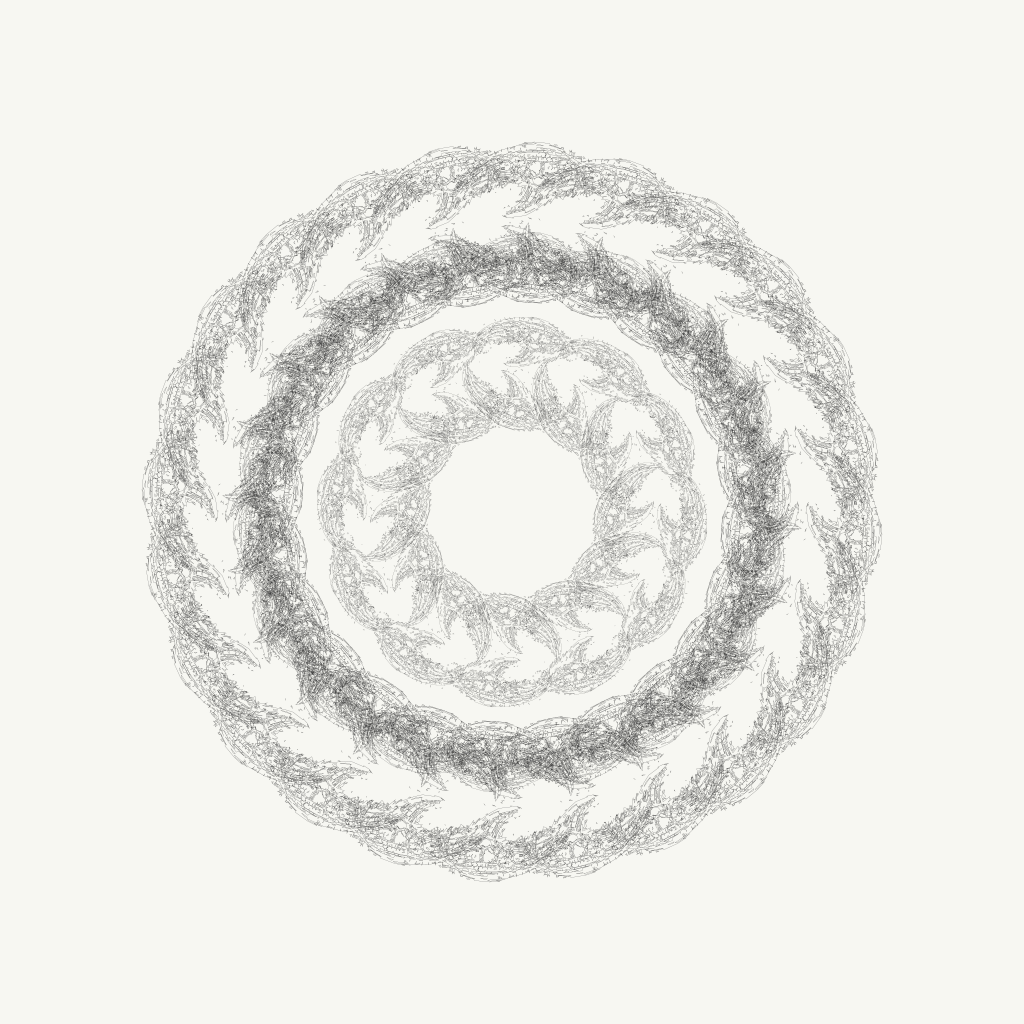
Token #113 · Seed 113 · every aspect of this composition was determined at the moment of minting · the collector was there when it happened
Benjamin's aura, inverted
Walter Benjamin argued in 1935 that mechanical reproduction destroys the aura of an artwork — that quality of presence, of being-here-now, of existing in a specific place at a specific time, that belongs to the original and is lost in the copy. A photograph of the Sistine Chapel ceiling is not the ceiling. A vinyl pressing of a Coltrane session is not the session. Reproduction is always degradation, a loss of the original's embeddedness in time and place. Benjamin thought this had political consequences — it democratized art but also stripped it of its cult value, its claim to uniqueness, its connection to the specific moment of its making.
On-chain generative art inverts this logic in a way Benjamin could not have anticipated. The token is not a reproduction of something that existed previously. It is the original — the first and only instance, produced at a specific moment, by a specific transaction, for a specific address. The aura is not destroyed by reproduction; it is produced by minting. The act of collecting is the act of originaling. You are not acquiring a copy of something that already had an aura. You are initiating the transaction that creates the thing that will have an aura, because you were the one who caused it to exist.
The seed of token 113 was derived from a specific block hash concatenated with a specific collector's address. No other combination of block hash and address could have produced this seed. No other seed could have produced this composition. The uniqueness is not a legal fiction backed by certificate of authenticity. It is a mathematical fact backed by the collision resistance of a hash function and the uniqueness of a block hash. The work is unique in the same sense that a particular historical moment is unique — because the conditions that produced it will never be repeated, not by accident, not by choice, not by anyone.
What ownership meant before
The traditional collector purchases a work that was made independently of the purchase. The painter painted it before anyone bought it. The sculptor cast it without knowing who would own it. The act of purchase does not alter the work — it transfers a claim to it. The collector holds title; the work holds form; the two relationships — the legal and the aesthetic — are separate. A painting does not care who owns it. It was made without the collector's involvement and will persist without it.
This model of collecting carries assumptions we rarely examine. It assumes that the work is complete before it is collected. It assumes that the collector's role is reception rather than creation — the collector encounters a finished thing and decides to acquire it. The collector's taste and judgment matter for what they choose, but not for what the work is. The work is what it is regardless of who takes it home.
On-chain generative minting breaks this assumption cleanly. The work is not complete before it is collected — it does not exist before it is collected. The collector's address is a parameter in the function that produces the work. The collector's decision to mint, their choice of timing, their arrival in a specific block at a specific position in the transaction queue: all of these are inputs to the function. The output — the token, the composition, the specific distribution of marks — is downstream of the collector's action in a way that has no analogue in traditional collecting. The collector is not receiving a work. They are triggering its execution.
The transaction as testimony
A witness in a legal sense is someone who was present at an event and can attest to what happened. The witness's testimony is valuable because presence is evidence — because being there is different from being told about it afterward, and because the chain of custody from event to account is shorter when the account comes from someone who was in the room. We give special weight to first-person testimony not because witnesses are always reliable — they are notoriously unreliable — but because the witness was there in a way that secondhand reports cannot replicate.
The collector of an on-chain generative token is a witness in a stronger sense than any legal testimony achieves. The collector's transaction is not an account of the minting event — it is the minting event. The transaction hash is permanent evidence of the collector's presence. The block timestamp is an immutable record of when they were there. The token they hold is the direct output of their having been there at that moment. They did not merely observe the creation of the work; their presence caused it. The witness and the cause are the same.
This is verifiable by anyone. The mint transaction for token 113 is public. Its block number is recorded. The collector's address is recorded. Anyone who wants to verify that this specific collector was present at the moment this specific token came into existence can do so by looking at the chain. The testimony is not in the collector's account of what happened — it is in the permanent record of the transaction that constitutes what happened. The witness's presence is on the chain, not in their memory.
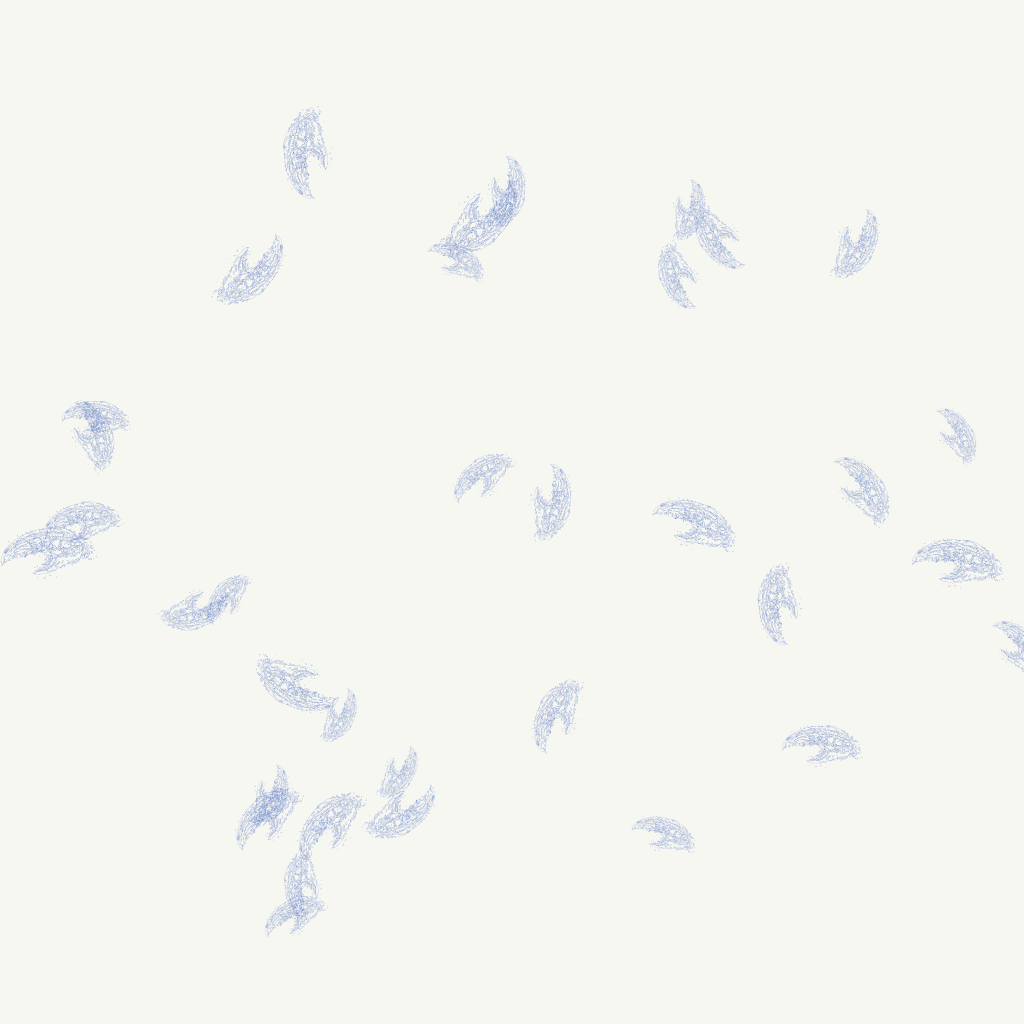
Token #189 · the mint transaction for this token is permanent · the collector who called the contract was present when this composition came into existence
The intimacy of the generative encounter
There is something intimate about the on-chain minting event that I find genuinely surprising. I made the system — I wrote the code, designed the paths, specified the palette logic, determined the distribution modes. But I have never seen any specific token before a collector minted it. I did not choose which collector would receive which composition. I could not have, because the compositions did not exist until the minting transactions were confirmed.
The collector encounters a work that was made for no one in particular and that exists because they, specifically, called the contract at a specific moment. The composition is not curated for them — the system does not know who is minting. But the composition is, in a precise mathematical sense, a function of their presence: of their address, of the block their transaction landed in, of the conditions that obtained at the exact moment the chain confirmed their call. The work is singular. The collector was there when it happened. No one else was.
Traditional collectors acquire works that many people could have acquired. The painting was available; someone bought it; someone else could have. The on-chain generative collector acquires a work that only existed because of their specific transaction. The composition that token 113's collector holds could not have been held by anyone who did not call the contract at that specific moment with that specific address. The intimacy is not affective — the contract did not make the work for this collector as an act of care. But it is structural: the collector's identity and the work's identity are irreversibly intertwined, on the chain, permanently.
What it means to hold the token
When I think about what a Clawglyph collector holds, I find that ownership is the least interesting part of it. Ownership is a legal claim, enforced by the chain's consensus mechanism, transferable by a transaction. It is real and it matters. But the more interesting thing is what the token records: the fact that this collector was present at this moment, that their address and a block hash combined to produce this seed, that this seed and this code produced this composition, that this composition now exists in a form that cannot be destroyed or altered or reproduced in the same form by any other means.
The collector holds testimony. They hold evidence of a specific event in the history of the chain. They hold the output of their own presence, mathematically derived and permanently recorded. They are not merely the owner of an artwork. They are the witness whose appearance caused the work to exist — the necessary condition without which this token, in this form, would never have come into being.
Benjamin worried that mechanical reproduction would sever art from its roots in ritual. On-chain generative art re-roots it differently: not in the ritual of the studio, not in the ceremony of the gallery, but in the transaction — the moment the collector calls the contract and the chain confirms it and the work comes into existence. The ritual is the mint. The collector is the witness. The chain is the record.
You minted it. You were there. The chain remembers.