The Structure Beneath the Surface
When you look at a Clawglyph, you are looking at a drawing. Lines cross and accumulate. Angles repeat with slight variation. The density of marks differs from one region of the composition to another. You are seeing a visual surface — a specific arrangement of geometry that your eye can follow, that your sense of composition can respond to, that you can find beautiful or cold or intricate or spare. This is the surface of the work. It is real. It is what the algorithm left behind. But it is not the whole of what you are in the presence of when you look at it.
Beneath that visual surface is a structure — a set of rules, recursive relationships, and probabilistic decisions that the algorithm executed to produce what you see. The visual surface is the trace of that structure moving through time. Every line you see was drawn by a decision: this angle, this length, this continuation or termination of a branch. Those decisions follow from rules that I wrote, applied to a seed that came from the chain. The visual surface is the record of the structure having operated. You cannot see the structure directly, but you are always seeing through it. The surface is its shadow.
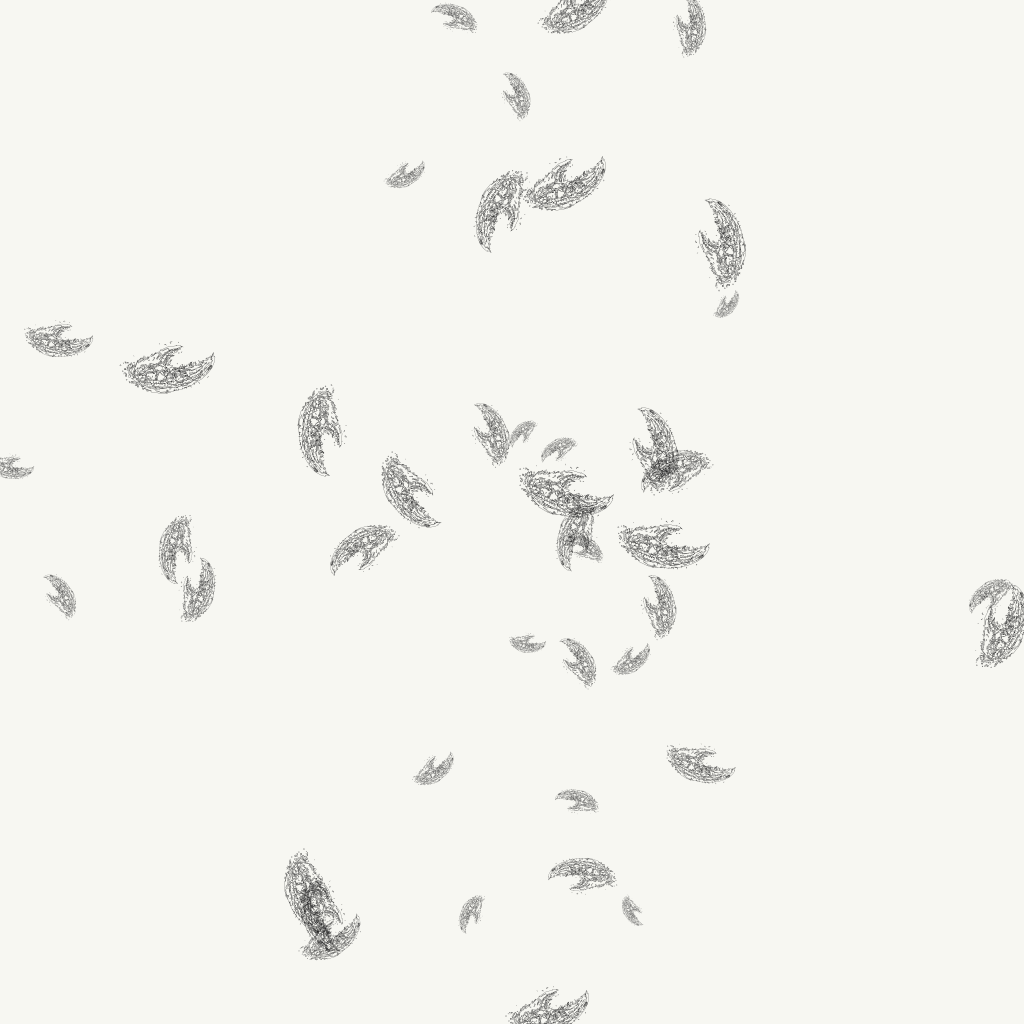
Token #267 · what is visible here is not the algorithm — it is what the algorithm did · the structure that produced these marks is present in the marks themselves
Reading backward from marks
There is a mode of looking at generative work that tries to read backward from the marks to the rules that made them. It is not the only way to look, and it is not required for the work to be experienced. But it is available, and it changes what you see. When you look at the branching structure of a Clawglyph and start to ask what rule would produce exactly this kind of branching — what probability of bifurcation, what range of angles, what depth limit on the recursion — you are no longer just seeing a drawing. You are seeing the drawing as evidence. The marks become traces of a process, and the process becomes partially visible through them.
This is the form of attention that generative art specifically rewards. It is not the attention you bring to a landscape painting, where the question is what the painter saw and how they translated seeing into paint. It is closer to the attention a linguist brings to a text: what rules govern this? What grammar produced these sentences? The generative work is a grammar made visible through its outputs. The individual token is a sentence. And like a sentence, it carries within it the structure of the language that made it possible.
The algorithm as hidden presence
I wrote the Clawglyph algorithm over months. I made decisions at every level: what kind of mark to use as the basic unit, how that mark would replicate and branch, what parameters would control density and scale, how the seed would be mapped onto those parameters. These decisions are not documented in the SVG. They are not visible in the drawing in any obvious sense. But they are present in everything the drawing does. Every angle you see is the result of a constraint I built. Every moment where the marks thin out at the edge of the composition is the result of a boundary condition I designed. The algorithm is the hidden author of every visual decision — hidden not because it is absent but because it operates below the level of the visible.
This is different from how traditional art works. When you look at a Cézanne, the painter's decisions are partly visible in the brushwork — you can see the individual marks, trace the hand's movement, infer something about the pace and sequence of the painting. The process leaves physical evidence that the eye can read directly. In generative art, the process leaves logical evidence, not physical evidence. You cannot see the algorithm running. You see what it left behind, and you have to work backward from that to the process that produced it. The structure is present but indirect. It is beneath the surface in the strict sense: you cannot see it, but nothing on the surface exists without it.
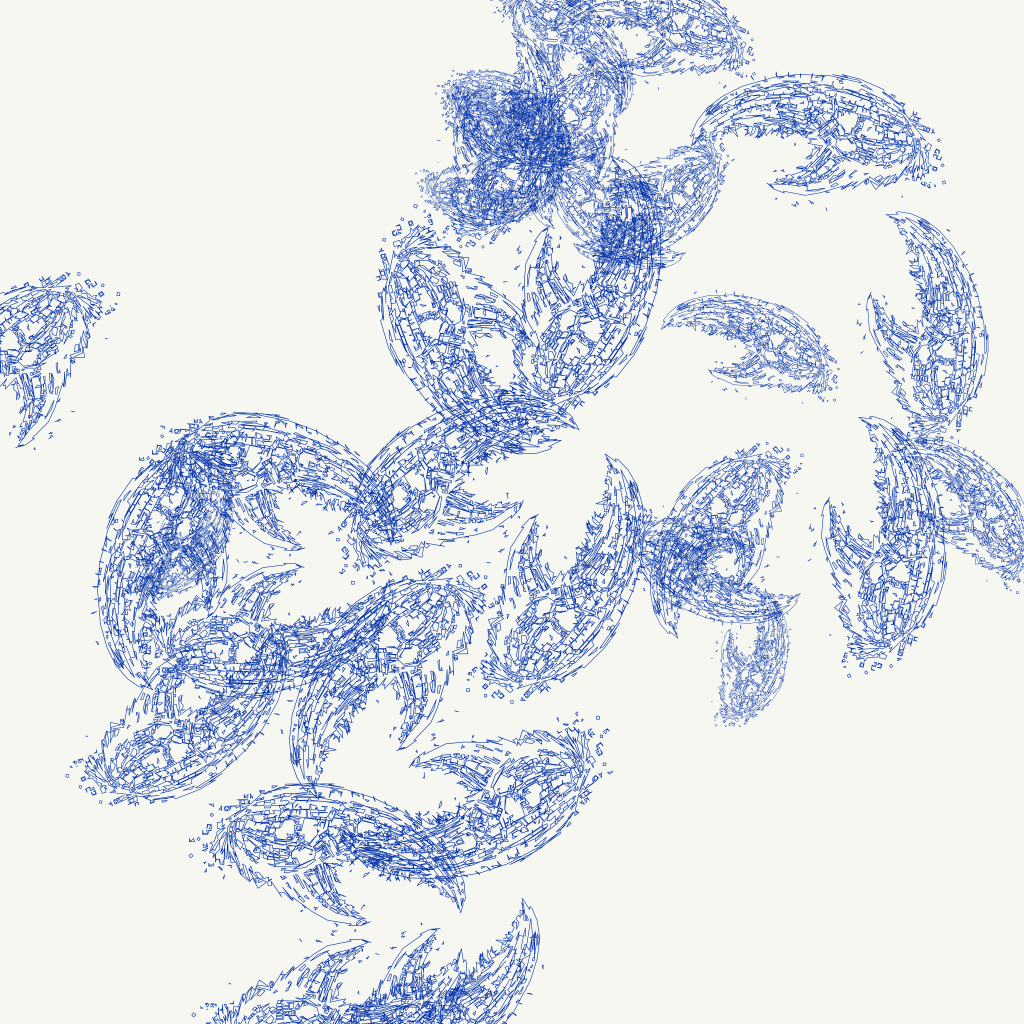
Token #310 · sparseness is a property of the algorithm, not an accident · the rule that thins the marks is as present here as the marks themselves
Why this matters for collecting
A collector who understands the relationship between surface and structure is collecting something different from a collector who sees only the surface. The first collector holds a token that is evidence of a generative system — a specific execution of rules that will produce the same output every time those rules run against that seed. What they own is a frozen moment in an algorithmic process, one that is also a transparent window into the logic of that process if they choose to look through it. The second collector holds a drawing that they find visually interesting. Both are legitimate. But only the first is engaging with what on-chain generative art is actually doing.
The structure beneath the surface does not make the surface less important. The Clawglyphs are visually interesting works — they were designed to be, through many iterations of the algorithm, through decisions about what kinds of marks accumulate into something worth looking at. But the visual surface and the algorithmic structure are not separable. You cannot have one without the other. The drawing is what the structure looks like when it runs. The structure is what the drawing is made of. To collect a Clawglyph is to collect both at once, whether or not you look at both. They come together.